
Understanding temperature effects, designing reliable optoelectronic systems
A semiconductor laser works well at 25°C in a laboratory environment. However, when the ambient temperature rises to 50°C, the output power may drop by more than 30%, the wavelength may drift by several nanometers, and lasing may even cease. This is not a quality issue of the device but an inherent temperature sensitivity of semiconductor lasers. Temperature is the most significant external factor affecting laser performance. Almost every parameter that determines laser performance—from carrier recombination efficiency to refractive index profile, from cavity length to bandgap energy—is temperature dependent. Understanding these relationships is the foundation for properly using lasers and designing reliable optoelectronic systems. This article starts from semiconductor physics, systematically analyzes the temperature characteristics of FP lasers, and provides practical thermal management and temperature control design solutions.
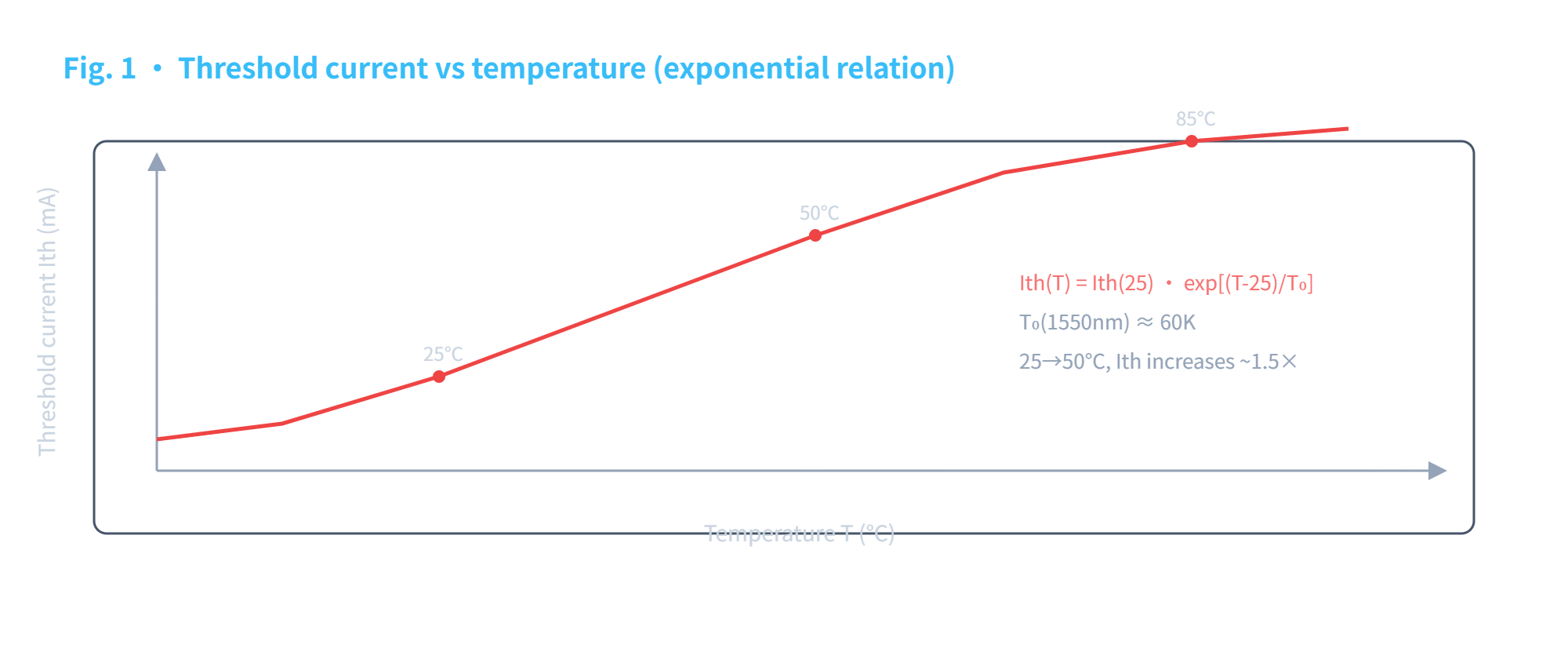
Threshold current increases exponentially with temperature; lower T₀ means higher sensitivity
1. Temperature Dependence of Threshold Current
1.1 Physical origins
The increase of threshold current with temperature arises from carrier leakage (carriers escape the active region at high temperature), Auger recombination enhancement (non-radiative rate increases sharply with temperature), and gain coefficient reduction (broadening of Fermi distribution reduces peak gain).
1.2 Empirical formula and characteristic temperature
Ith(T) = Ith(T₀) · exp[(T-T₀)/T₀]. Higher T₀ means better temperature stability. Typical values: 850nm FP lasers T₀ ≈ 120-180K; 1310/1550nm FP lasers T₀ ≈ 50-80K. For a 1550nm laser with T₀=60K, threshold current increases ~1.5× from 25°C to 50°C.
2. Temperature-induced Output Power Degradation
2.1 Slope efficiency reduction
Temperature rise reduces internal quantum efficiency, increases carrier leakage, and enhances free-carrier absorption, leading to a drop in slope efficiency and reduced output power at the same drive current.
2.2 Maximum output power limitation
At high temperature, thermal saturation (negative feedback between heating and efficiency) and reduced catastrophic optical damage (COD) threshold limit the maximum output power. In practice, the maximum operating power is kept below 50% of the COD threshold.
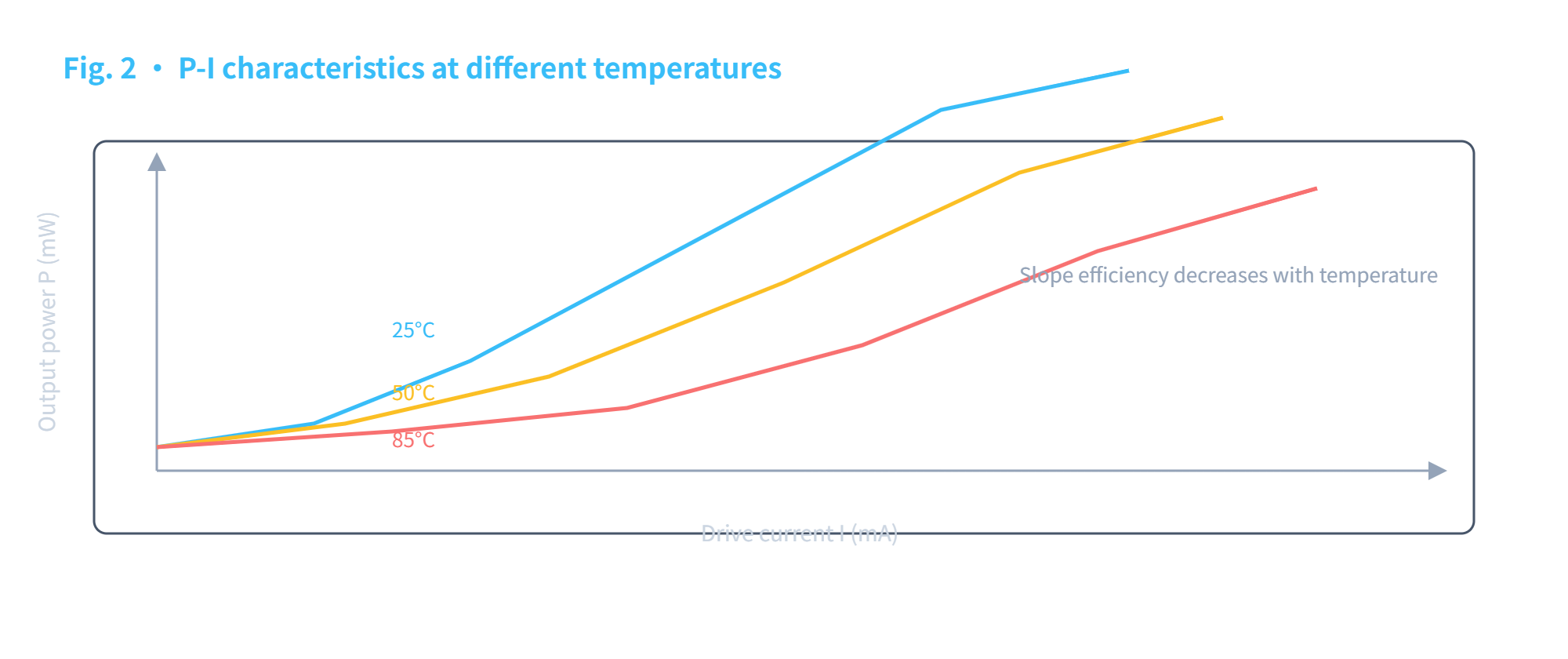
At the same drive current, higher temperature yields lower output power; threshold shifts right, slope decreases
3. Wavelength Shift: Thermal Tuning vs. Stability Trade-off
3.1 Mechanism and coefficient
Bandgap energy decreases with temperature (contributing ~0.3-0.5 nm/°C), and thermal expansion increases cavity length (contributing ~0.05 nm/°C). The typical wavelength-temperature coefficient of FP lasers is 0.3-0.5 nm/°C.
3.2 Mode hopping
As temperature increases, the gain spectrum redshifts. When the gain of an adjacent longitudinal mode exceeds that of the current mode, mode hopping occurs, accompanied by abrupt power changes. Shorter cavity length gives larger longitudinal mode spacing but smaller temperature interval between hops (typically 1-2°C per hop).
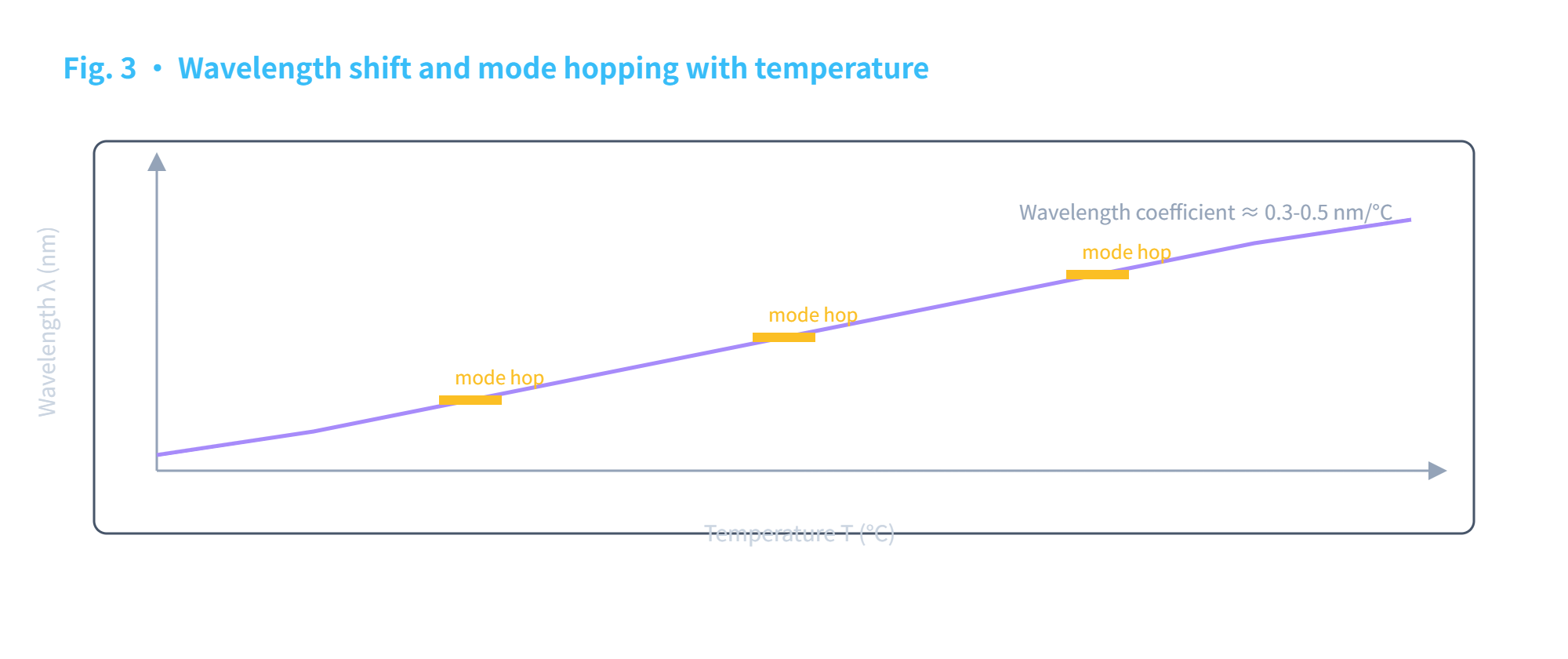
Wavelength drifts linearly with temperature, with periodic mode hops due to longitudinal mode competition
4. Thermal Resistance and Junction Temperature Calculation
Thermal resistance Rth = (Tj - Tc)/P, unit °C/W. Typical values: bare chip 5-10°C/W, TO-CAN package 10-30°C/W, butterfly package 8-15°C/W. Example: 1550nm FP laser, operating current 150mA, forward voltage 1.2V, package thermal resistance 20°C/W, ambient 50°C, dissipation 0.18W, junction temperature rise 3.6°C, junction temperature 53.6°C.
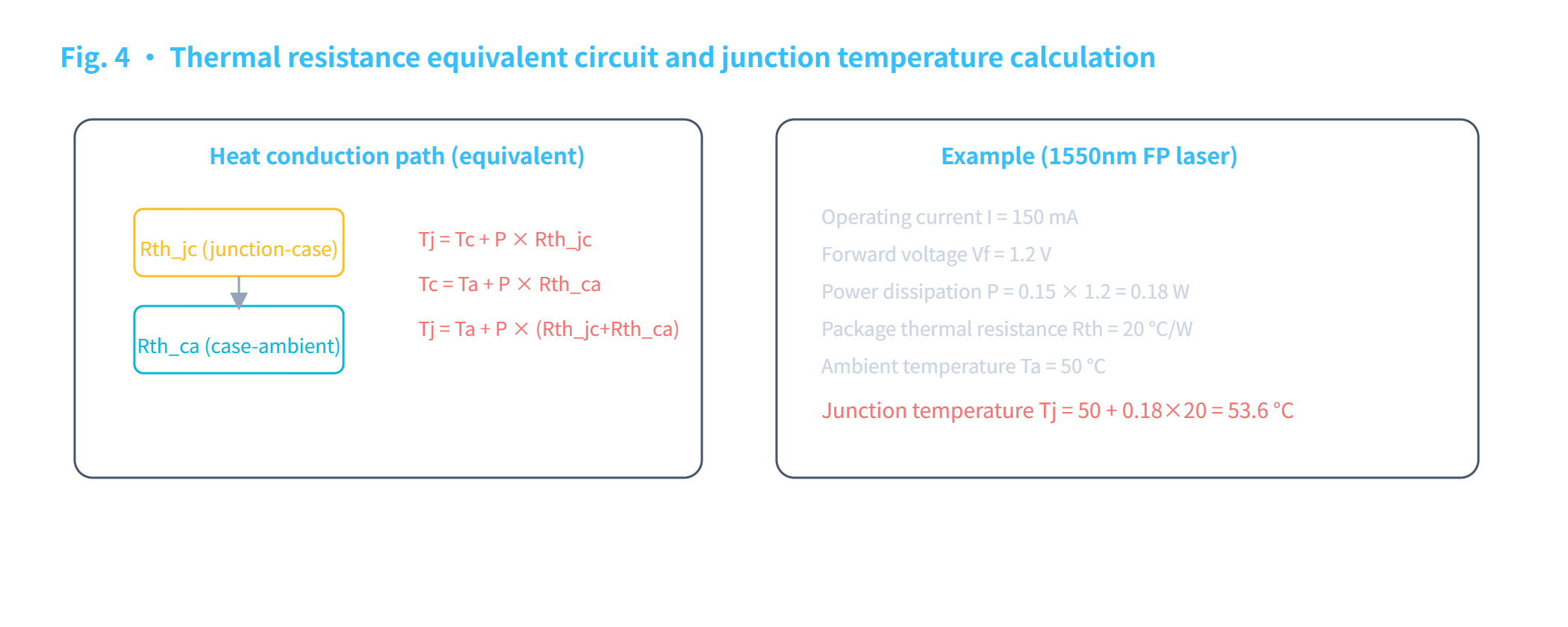
Series thermal resistance model; calculate junction temperature from dissipation and thermal resistances
5. Practical Thermal Management Design
Thermal management must optimize every level of the heat conduction path: chip attach (AuSn solder, silver paste, silver sintering), heat sink (oxygen-free copper, WCu, diamond composite), system-level cooling (metal housing, forced air, liquid cooling). PCB design: use metal-core or ceramic substrates, maximize copper area and thermal vias.
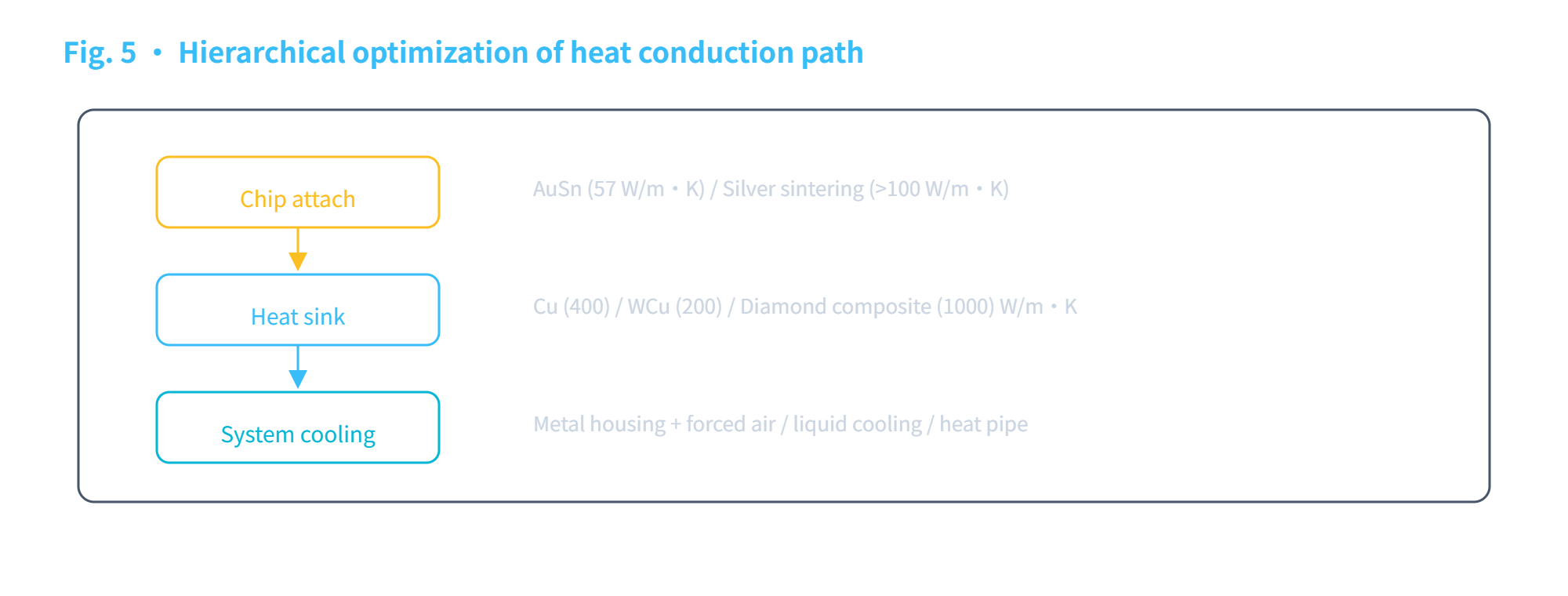
From chip attach to system cooling, reduce thermal resistance at every stage to keep junction temperature under control
6. Temperature Control Circuit Design
TEC uses the Peltier effect for active cooling/heating, no moving parts, accuracy up to 0.01°C. Temperature control circuit includes temperature sensing (NTC thermistor), PID control algorithm, and H-bridge driver. The thermistor must be in good thermal contact with the laser submount. Typical NTC: 10kΩ @25°C, B value 3380-3950K.
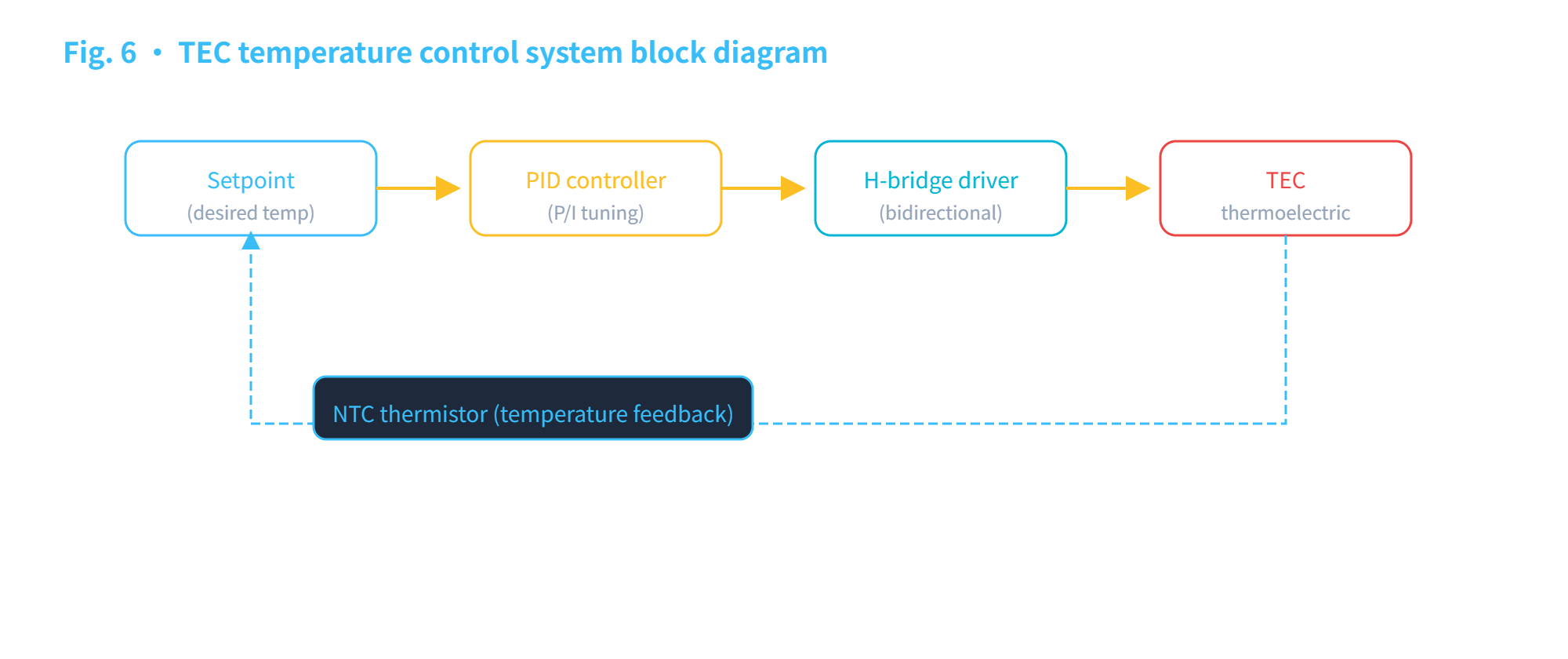
Closed-loop PID control: compare setpoint and actual temperature, drive TEC bidirectionally
7. Package Thermal Resistance and Temperature Control Strategies
Package type directly impacts thermal management design. The table below compares typical thermal resistance and recommended control strategies.
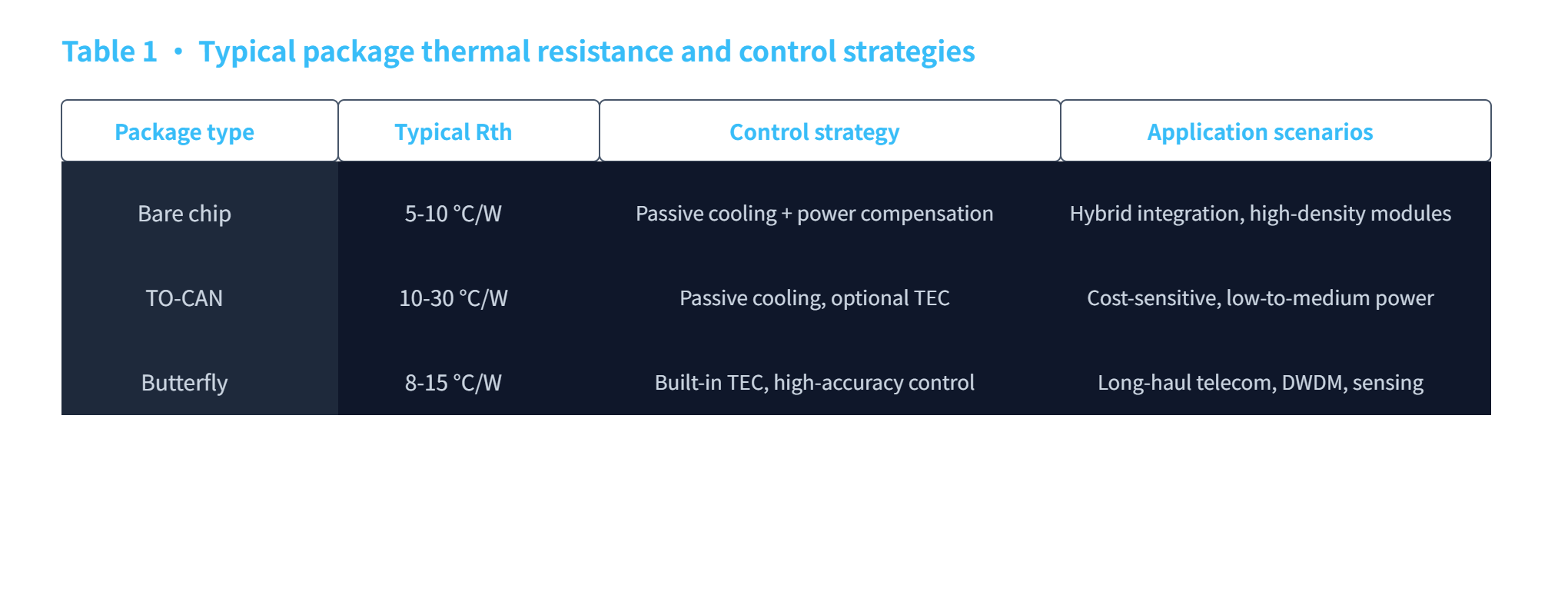
Lower package thermal resistance means better heat dissipation; butterfly package with TEC is for high-stability applications
8. Testing and Verification Methods
Temperature characterization includes: Ith vs. temperature curve (extract T₀), P-I curves at multiple temperatures (slope efficiency vs. temperature), λ-T curve (wavelength coefficient and mode hopping), and thermal resistance measurement (electrical or optical method).
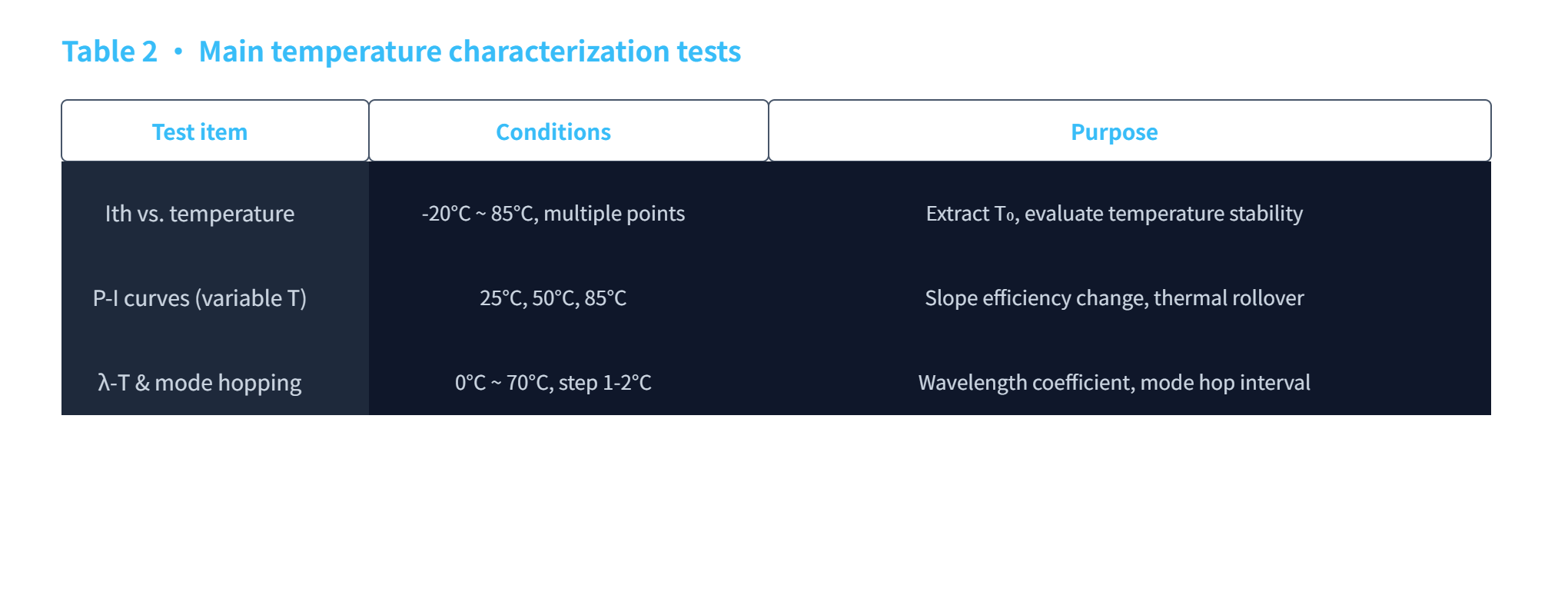
Complete temperature characterization is fundamental for reliability assessment and application suitability
9. Reliability Qualification and Environmental Stress Screening
Temperature-related reliability tests: high-temperature operating life (HTOL, 85°C/1000-2000h), temperature cycling (TC, -40°C ↔ 85°C/100-500 cycles), thermal shock (TS, 0°C ↔ 100°C/<10s transition), and high-temperature high-humidity storage (THB, 85°C/85%RH/1000h).
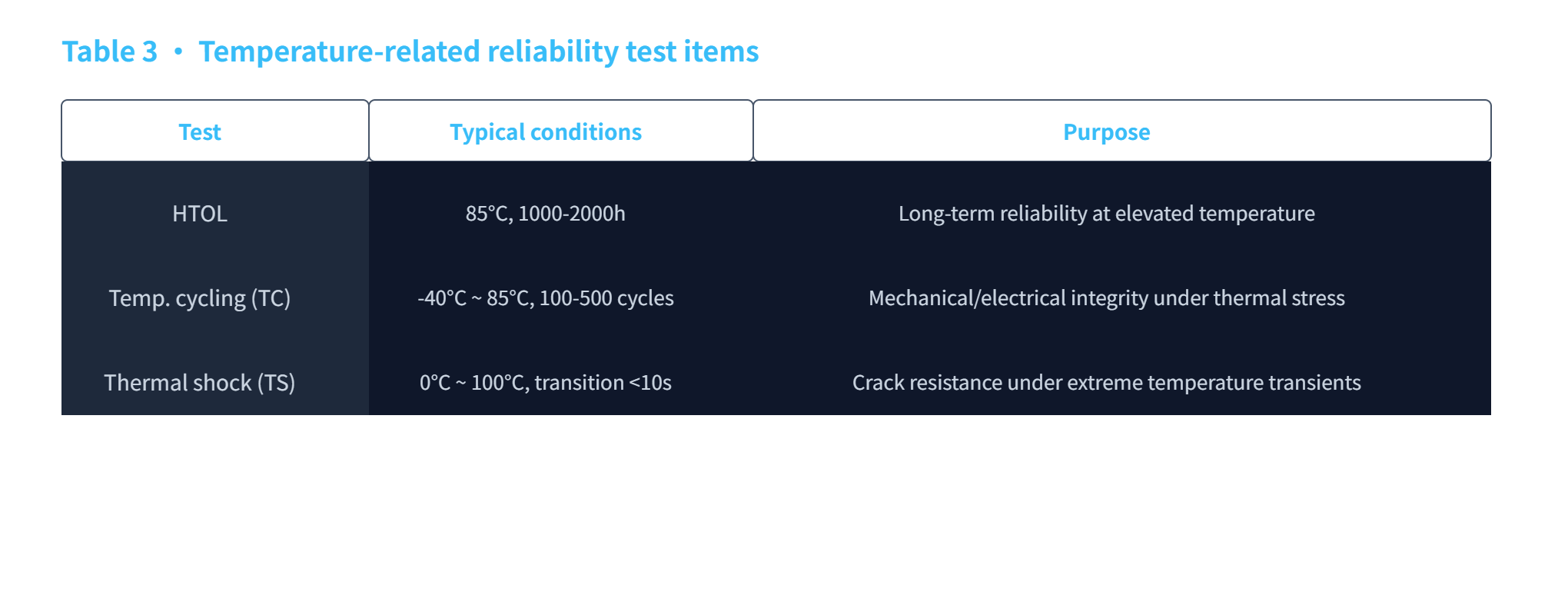
Reliability qualification must cover HTOL, TC, TS and THB to ensure long-term stability
10. Summary
The temperature characteristics of semiconductor lasers embody the interplay of device physics and material science. Understanding how threshold current, output power, and wavelength vary with temperature is a prerequisite for proper laser usage. Thermal management design requires a system-level view: from chip attach to heat sink, from PCB to system-level cooling, every step can become a thermal bottleneck. In applications demanding high wavelength stability, TEC temperature control is an essential investment; in cost-sensitive applications, passive cooling combined with power compensation may be a more pragmatic choice. We offers various package options for FP lasers, from TO-CAN to butterfly packages, to meet the temperature-control requirements of different applications. When selecting a laser, besides core parameters such as wavelength and power, one should also consider the temperature stability specifications and package thermal resistance, laying a solid foundation for subsequent system design. Finally, reliability verification closes the loop of temperature management: through systematic temperature characterization and environmental stress screening, ensure that laser products operate reliably over the long term in the target application environment.