
I. Physical Principles: From “Wave Superposition” to “Light Ruler”
Interference is one of the most fundamental phenomena of wave optics: when two or more coherent light beams meet in space, their amplitudes add to produce bright and dark fringes—constructive where the path difference is an integer multiple of the wavelength, and destructive where it is a half-integer multiple.
Interference provides humanity with a “precision ruler” based on the wavelength of light, which is exceptionally stable (the meter definition based on laser frequency reaches 10⁻¹¹ accuracy), and the measurement is performed entirely in the optical domain without mechanical transmission chains.
The basic logic of laser interferometry: split a laser beam into two paths, let them travel along different routes, then recombine them. Any tiny change in path length or refractive index shifts the interference fringes—each fringe shift corresponds to a half-wavelength change in optical path (316.3 nm for He-Ne lasers). By counting fringe shifts, displacement or refractive index changes can be derived with nanometer to picometer precision.
Interferometry offers three core advantages: non-contact (no wear or deformation), ultra-high sensitivity (wavelength-level signal amplification), and traceability to natural constants (atomic transition frequencies).
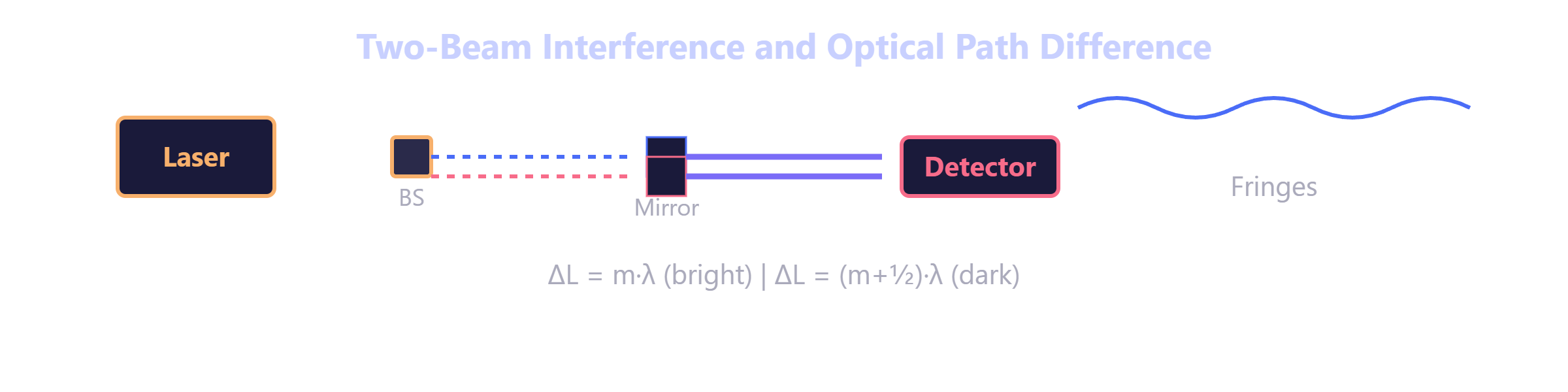
Figure 1: Basic principle of laser interferometry and interference fringes
II. The Interferometer Family: From Lab to Industry
Over decades, interferometers have evolved into a diverse family covering various structures and applications. Based on optical configuration and use cases, six main types are distinguished:
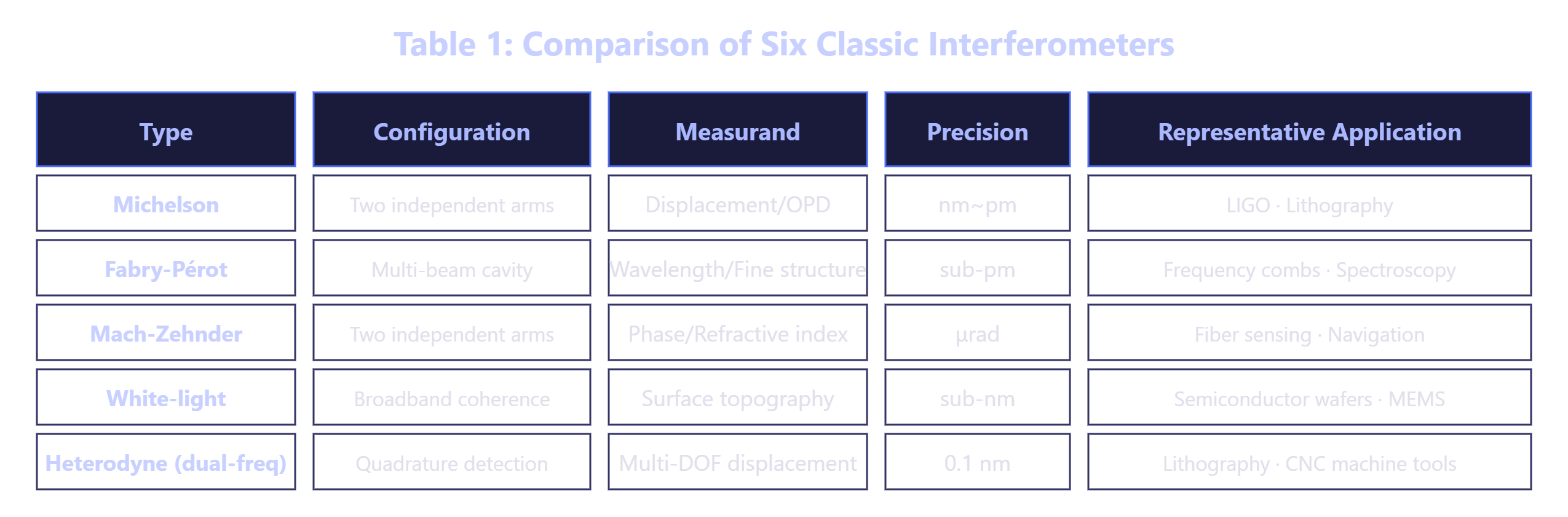
Figure 2: Comparison of six classic interferometer types
Among them, the heterodyne (dual-frequency) laser interferometer is the most widely used in industry—serving as the position feedback element in lithography stages, CNC machines, and coordinate measuring machines, combining immunity to environmental disturbances with high-speed dynamic measurement.
III. Domestic Breakthroughs: From Dependency to Self-Reliance
3.1 Lithography Dual-Frequency Interferometer: Tsinghua – Leice Production Line
The stage positioning accuracy in lithography machines requires sub-nanometer precision, posing extreme demands on dual-frequency laser interferometers. The birefringence-based dual-frequency interferometer invented by Professor Zhang Shulian's group at Tsinghua University has been mass-produced by Beijing Leice Technology—offering twice the laser power, one to two times larger frequency separation, and no coupling between the two frequencies compared to traditional Zeeman lasers. Key specs: resolution 1 nm, measurement range 0–70 m, nonlinear error <1 nm, speed >2 m/s. This product has been successfully applied in prototype R&D of domestic lithography machines, with over 50 units deployed.
3.2 Tsinghua “High-Speed Multi-Axis High-Resolution Laser Interferometry” Project
Supported by the national major special project “Extreme Large-Scale Integrated Circuit Manufacturing Equipment and Complete Process,” Professor Li Yan's team at Tsinghua completed full-chain independent development of high-speed, multi-axis, large-range, high-resolution laser interferometry systems. The sub-nanometer traceable heterodyne interferometer has been applied to comparison and calibration of multi-dimensional laser measurement systems, and the lithography-dedicated dual-frequency system has accumulated over 50 units, reducing dependence on imported high-end interferometers.
3.3 USST – Huili: Digital Laser Interferometer Fills Domestic Gap
The team of Academician Zhuang Songlin and Professor Han Sen at the University of Shanghai for Science and Technology (USST), in collaboration with Suzhou Huili Instrument, developed a digital laser interferometer that integrates metrological traceable laser wavelength, digital phase-shifting, and computer technology. Key metrics such as PV value measurement have reached internationally leading levels, and some products fill domestic gaps.
3.4 CASC: Multi-Degree-of-Freedom Laser Interferometer Metrology Standard
The China Academy of Space Technology (CASC) has successfully developed a high-precision integrated multi-DOF laser interferometer metrology evaluation standard device—with 100% independent intellectual property and international advanced level, providing strong support for localization of aerospace and high-end manufacturing equipment.
In the field of white-light interferometry, domestic instruments such as the SuperViewW1 from Chotest can measure surfaces from super-smooth to rough, covering roughness from 0.1 nm to tens of micrometers, with vertical scanning ≤10.3 mm and roughness repeatability of 0.005 nm. Shanghai Aishihwei, equipped with self-developed LVDC sensors, offers vertical resolution 0.1 nm and scanning repeatability ≤3 Å, maintaining accuracy even in Class 1000 FAB environments, while maintenance costs are 50% lower than imported equipment.
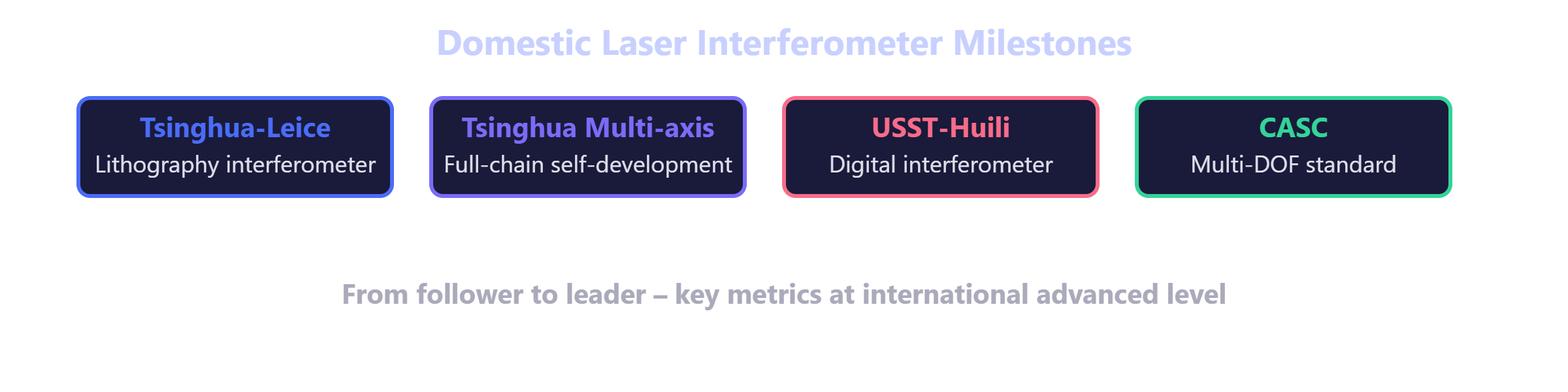
Figure 3: Key domestic milestones in laser interferometry
IV. Listening to “Ripples in Spacetime”: Gravitational Wave Detection with Laser Interferometry
4.1 LIGO: First Direct Detection of Gravitational Waves
On September 14, 2015, LIGO directly detected the first gravitational wave signal (GW150914) from the merger of two stellar-mass black holes 1.3 billion light-years away. This discovery earned the LIGO team the 2017 Nobel Prize in Physics.
LIGO's core measurement device is a Michelson laser interferometer with two 4-km arms perpendicular to each other, held in ultra-high vacuum. Laser light is split and travels along both arms, reflected by end mirrors, and recombined. Gravitational waves alternately stretch and compress space, causing different optical path changes in the two arms, thus shifting the interference fringes. LIGO's sensitivity reaches 10⁻¹⁸ m—equivalent to detecting the thickness of a sheet of paper at Proxima Centauri.
4.2 China's Taiji Program: Engineering Leap for Space-Based GW Detection
China's Taiji program deploys three satellites forming a 3-million-km laser interferometer arm to detect gravitational waves in the 0.1 mHz – 1 Hz band, complementing ground-based detectors in the low-frequency range.
In May 2026, the Institute of Mechanics, CAS, announced a major achievement: the first full-function interferometer optical platform for Taiji has been successfully developed and passed ground performance tests and noise evaluation, moving from principle exploration to engineering development. The platform uses a novel “positive-negative separation” 3D layout to isolate heat sources, with ranging precision required at the picometer level—equivalent to detecting a displacement less than one ten-thousandth of a hair's diameter over the Earth-Moon distance.
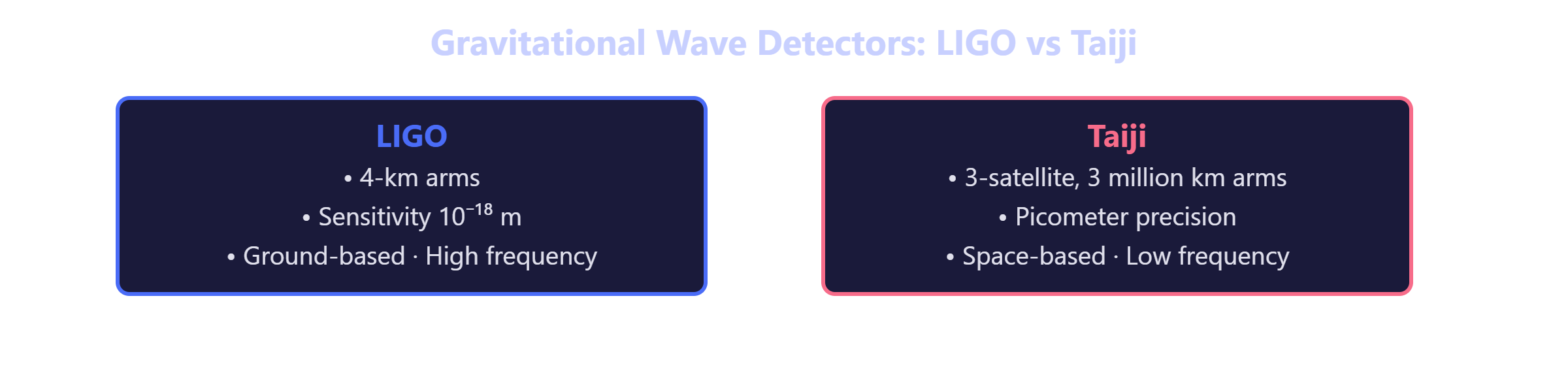
Figure 4: Comparison of ground-based and space-based gravitational wave detectors
V. White-Light Interferometry and Optical Profilers: “Nanoscopes” for Semiconductor Manufacturing
White-light interferometry is one of the most widely used interferometric techniques in industrial inspection. It exploits the coherence of broadband (white-light) sources—when the measurement and reference optical paths are equal, all wavelengths add constructively, producing a high-contrast zero-order fringe. By scanning the surface and recording the interference signal, the 3D surface topography is reconstructed with sub-nanometer resolution.
In semiconductor manufacturing, white-light interference profilers are critical for wafer-level quality inspection:
Wafer bow/warp measurement: Detects flatness deformation affecting lithography focus and overlay.
Film thickness and step height: Accuracy better than 0.3% for photoresist, oxide, and metal films.
CMP planarization inspection: Monitors microscopic surface roughness after polishing.
MEMS device characterization: Cantilevers, comb structures, micro-mirrors, covering roughness from 0.1 nm to tens of micrometers.
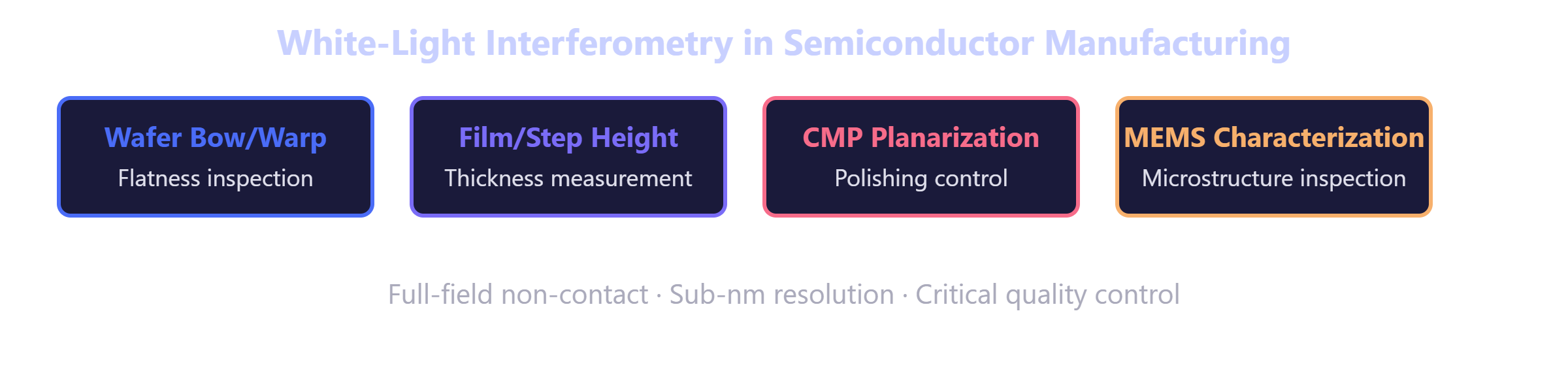
Figure 5: Key applications of white-light interferometry in semiconductor manufacturing
VI. Astronomical Optical Interferometry: “Stitching” Telescopes into Earth-Sized Apertures
Another stunning application is in astronomy: multiple telescopes at different locations simultaneously observe the same target; their beams are precisely aligned with optical delay lines and coherently combined, creating an effective aperture equal to the maximum baseline between telescopes.
The VLTI at ESO combines four 8.2-m and four 1.8-m telescopes to achieve an equivalent diameter of 200 m; the CHARA array reaches 330 m; GRAVITY+ achieves milli-arcsecond resolution and has mapped stellar orbits around the supermassive black hole at the Galactic center.
The US MROI, expected to be completed around 2025, comprises ten 1.4-m telescopes with a 347-m baseline, capable of resolving centimeter-scale details on geostationary satellites—opening new possibilities for stellar surface imaging and protoplanetary disk studies.
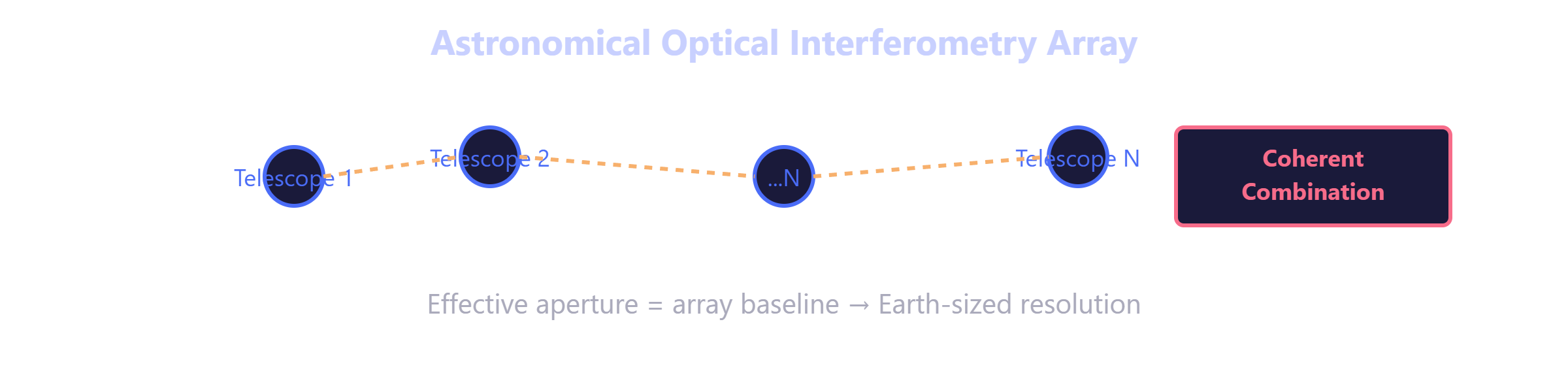
Figure 6: Principle of astronomical optical interferometry array
VII. Cold-Atom Interferometry: Emerging Tool for Quantum Precision Measurement
Traditional optical interferometers use photons as probes; cold-atom interferometers use ultra-cold atomic clouds (temperatures down to nK) whose de Broglie wavelengths can reach micrometers, greatly enhancing coherence. When atoms fall freely, stimulated Raman transitions create interference fringes sensitive to gravitational acceleration, reaching ngal sensitivity levels.
Chinese researchers have innovatively introduced atomic filtering and laser phase modulation into cold-atom interferometers, achieving high phase coherence and spectral purity Raman lasers, significantly improving long-term stability and reliability. This progress will promote domestic cold-atom gravimeters for applications in geological exploration, inertial navigation, and Earth science.

Figure 7: Principle of cold-atom interferometry
VIII. Outlook and Conclusion: From Nanoscale Workshops to Cosmic Distances
Laser interferometry is one of the most vibrant branches of optical precision measurement—from Michelson and Morley's search for “ether” in 1881, to LIGO's first detection of gravitational waves in 2015, to the Taiji interferometer platform entering engineering development in 2026, each step stands at the intersection of classical optics and quantum physics.
Looking ahead, laser interferometry will evolve in several directions:
Ultra-precision industrial inspection: As advanced nodes push toward 2 nm and below, the integration, speed, and environmental adaptability of white-light and heterodyne interferometers will continue to improve.
Space-based gravitational wave networks: Ground arrays (LIGO/Virgo/KAGRA) and space missions (LISA/Taiji) will together listen to the entire gravitational wave spectrum.
Quantum-enhanced interferometry: Squeezed light and entangled states will push sensitivity beyond the shot-noise limit toward the Heisenberg limit.
Chip-scale integrated interferometry: OCT, integrated photonic gyroscopes, and other miniaturized devices will bring interferometry to medical diagnostics and autonomous navigation.
When a beam of light can measure atomic-scale displacements, detect cosmic gravitational perturbations, and safeguard nanometer-scale chip manufacturing—the interferometer, born in 1887, continues to expand the boundaries of human perception at both the smallest and largest scales.
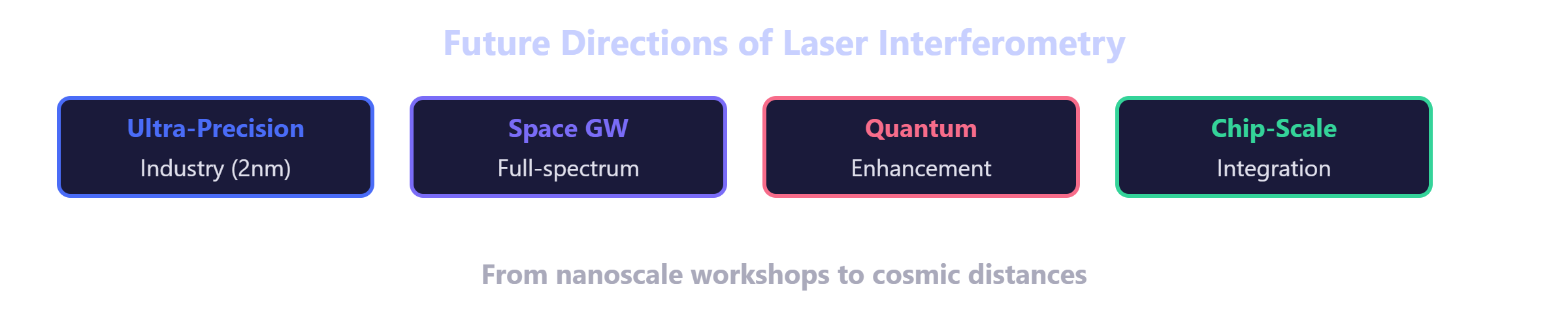
Figure 8: Four future directions of laser interferometry