
I. "Turning Every Fiber into a Sensor": The Physical Foundation of Distributed Sensing
Fiber optic sensing technology is undergoing a profound paradigm shift – from traditional "point probes" to "distributed neural networks". In conventional schemes, sensors are deployed at critical points, resulting in limited coverage and large blind areas. In distributed fiber sensing, the entire fiber itself acts as the sensor, with every meter – or even every decimeter – becoming an independent sensing unit, enabling full-coverage, no-blind-zone perception of large-scale infrastructure.
This revolution is built on three scattering phenomena that occur when light propagates in optical fibers – Rayleigh, Raman, and Brillouin scattering. Each has unique sensitivity to different physical quantities, giving rise to three major technological routes: Rayleigh scattering is extremely sensitive to strain (down to 1με) and is the core of Distributed Acoustic Sensing (DAS); the Stokes/anti-Stokes ratio of Raman scattering is temperature-dependent, forming the basis of Distributed Temperature Sensing (DTS); Brillouin frequency shift is sensitive to both strain and temperature, enabling simultaneous measurement in BOTDA systems with monitoring distances exceeding 50 km.
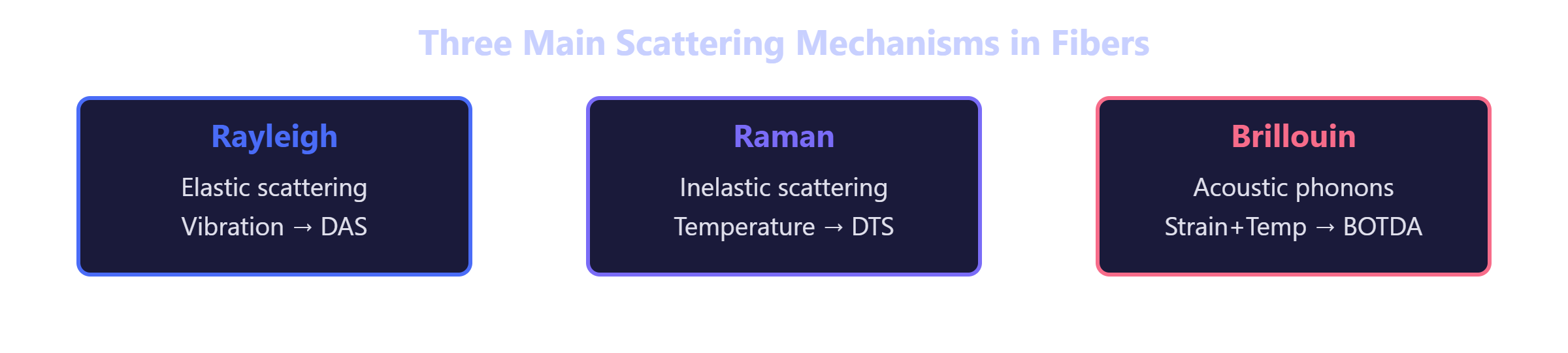
Figure 1: Three scattering mechanisms and their corresponding sensing technologies
II. Fiber Bragg Grating (FBG): Quasi-Distributed High-Precision Sensing
Fiber Bragg Gratings (FBGs) are periodic refractive index modulations written into the fiber core by UV light. When broadband light passes through an FBG, the wavelength satisfying the Bragg condition is reflected while others are transmitted. The Bragg wavelength is proportional to the grating period and effective index – changes in temperature or strain alter the period, causing a wavelength shift. By measuring this shift with a high-precision interrogator, temperature or strain can be derived. Typical specs: accuracy ±3με or ±0.1°C, resolution<1με, range ±3000με. Compared to fully distributed techniques, FBG is "quasi-distributed" – gratings must be pre-written at specific points – but offers higher precision and faster response (kHz), and allows wavelength-division multiplexing, enabling dozens to hundreds of sensors per fiber. In bridge monitoring, FBGs are maturely used for stress on main girders, cable vibration, and foundation settlement.
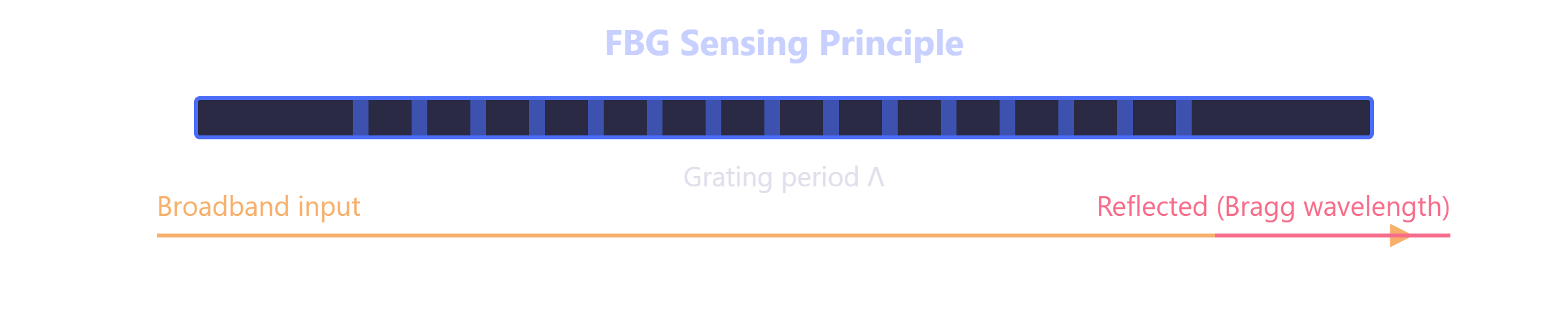
Figure 2: Fiber Bragg Grating (FBG) sensing principle
III. Distributed Acoustic Sensing (DAS): Fiber as a "Stethoscope"
Distributed Acoustic Sensing (DAS) is based on phase-sensitive optical time-domain reflectometry (Φ-OTDR). The system launches narrow-linewidth laser pulses into the fiber and detects backscattered Rayleigh signals. External vibrations cause local strain, modulating the phase or intensity of the scattered light. With high-speed acquisition and coherent demodulation, the entire fiber becomes a continuous array of "virtual sensors". Key advantages: long range (up to 80 km), continuous distributed coverage, high sensitivity (meter-level resolution), and no need for power along the cable. The main challenge is signal-to-noise ratio; in 2026, the Shanghai Institute of Optics and Fine Mechanics proposed a multi-channel data fusion method to significantly improve performance.
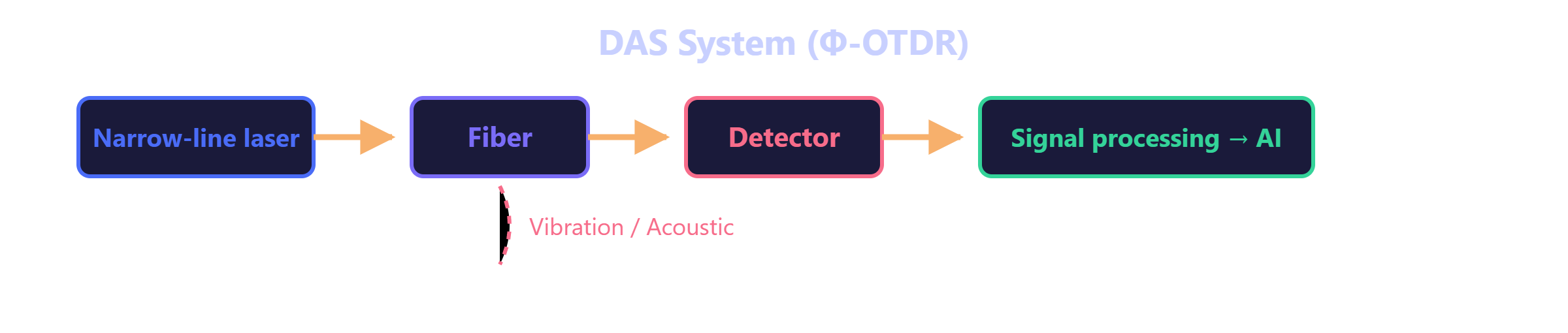
Figure 3: Distributed Acoustic Sensing (DAS) system block diagram
In oil & gas pipeline safety, DAS has been deployed at scale. In 2026, Changqing Oilfield completed permanent fiber monitoring in a CCUS injection well, reaching 1842 meters depth for real-downhole temperature and pressure monitoring. DAS combined with AI detects third-party threats like excavation and drilling; Huawei's OptiXsense EF3000 is commercially operational. For high-speed rail, a 60-km trial in Kunming used DAS to collect train vibration data and machine learning to identify wheel faults – normal wheels show frequencies<60 Hz, while faulty wheels reach 100 Hz, with direction recognition accuracy of 98.75%.
IV. Submarine Cables: From Communication Pipeline to Ocean Sensing Platform
In February 2026, China Telecom conducted a joint distributed fiber sensing experiment in the Beihai-Weizhou Island area, marking the entry of "one cable, multiple uses" into marine science. Submarine cables, with DAS, become platforms for seismic wave detection, tsunami warning, and seafloor structure monitoring. In January 2026, Science published a paper using a 15-km telecom cable in California to record a magnitude-7 earthquake, capturing the entire rupture process – from initiation, deceleration, re-acceleration, to breaking the sound barrier. A Caltech researcher commented, "It feels like you thought Saturn was just an ordinary star." During the Winter Olympics, a 600-meter fiber loop was connected to DAS/DTS systems, creating 1600 sensors for real-time monitoring of underground structures and temperature around the venues, demonstrating value for major event security.

Figure 4: Submarine cable with DAS for ocean sensing
V. Technology Comparison and Selection Logic
Distributed fiber sensing has formed a complete spectrum including FBG, DTS, DAS, and BOTDA, each with its own strengths.
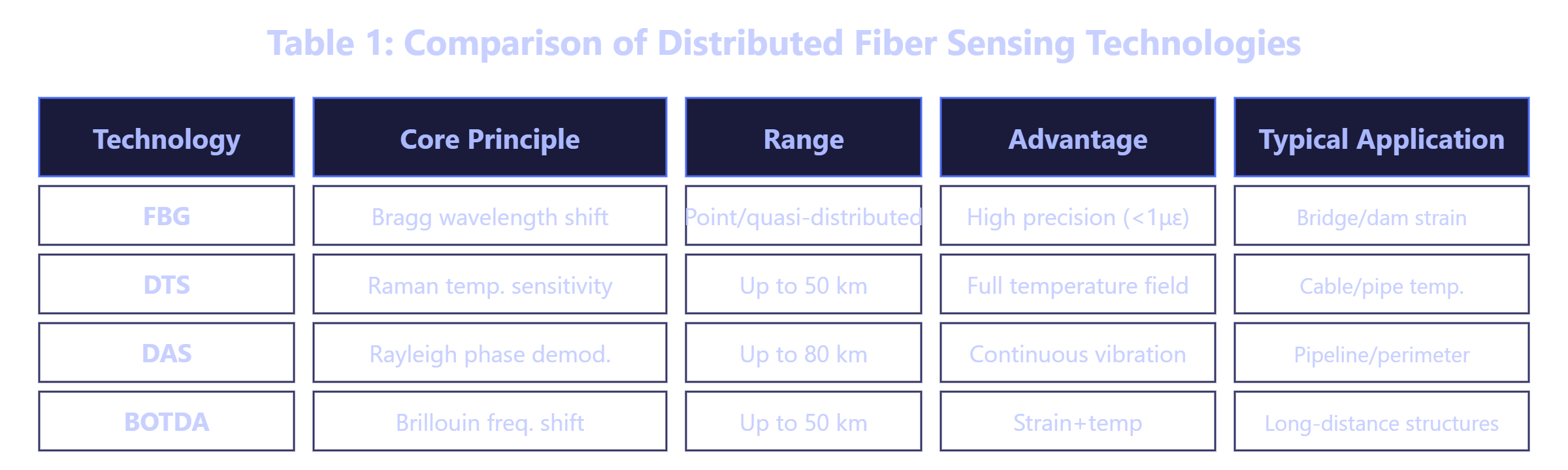
Figure 5: Comparison of four main distributed fiber sensing technologies
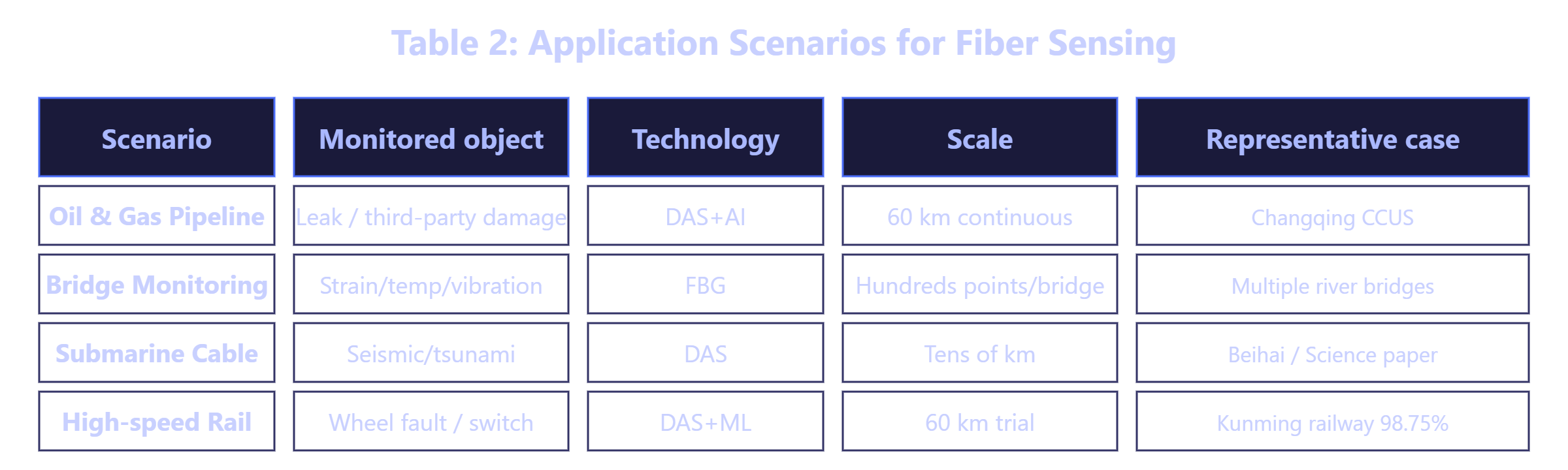
Figure 6: Application mapping for fiber sensing technologies
VI. Industry Ecosystem and Localization Progress
China's fiber sensing industry has formed a complete value chain. At MWC 2026, Yangtze Optical Fiber and Cable showcased a wireless fiber sensing solution with a sensing range up to 50 meters without physical cabling. Domestic DAS/DVS providers such as Pucun Technology (HiFi-DAS), Hangzhou Guangchuan, and Shanshan Optoelectronics (rotating-body dynamic DTS) have achieved large-scale deployment in urban lifelines, oil wells, railway tracks, and geological hazard monitoring. On the algorithm side, dedicated AI models for leak detection, perimeter intrusion, etc., have significantly reduced false alarm rates.
VII. Conclusion and Outlook: Towards the "Fiber Neural Network" Era
Fiber optic sensing is evolving from "point monitoring" to "pervasive sensing", from "passive alarming" to "active warning", and from "manual analysis" to "AI-driven identification". Its core value lies in repurposing existing communication fibers as sensing networks, delivering full-coverage, all-weather, multi-parameter monitoring of large infrastructure without extra cabling. Future trends: multi-parameter fusion (temperature+strain+vibration), AI-powered event recognition, and land-sea-air integration (submarine cables, drone-deployed fibers). Optical fibers are no longer just information "highways" – they are becoming the "neural networks" that perceive the physical world.