
I. From "Seeing Light" to "Reading Light": The Mission Shift of Photodetection
Photodetectors are the "eyes" of optoelectronic systems — their core task is to convert incoming photon energy into measurable electrical signals. Whether in fiber‑optic communications recovering digital signals, or in quantum communications capturing single photons, detector performance directly determines the sensitivity, speed, and accuracy limits of the entire system.
However, as applications evolve from traditional optical communications to quantum communications and optical sensing, the challenges facing detectors have undergone a qualitative leap: no longer "how many photons are detected," but "precisely capturing the arrival time, energy, and quantum state of every single photon." This shift pushes photodetection technology to the forefront of physical limits, giving birth to revolutionary technologies such as superconducting nanowire single‑photon detectors (SNSPDs).
Meanwhile, the development of microwave photonics provides a new path for the optical detection and processing of high‑frequency signals — from quantum key distribution (QKD) to quantum computing, and from microwave photonic radar to high‑precision sensing. Microwave photodetectors are becoming indispensable key devices in the information infrastructure of the quantum era.
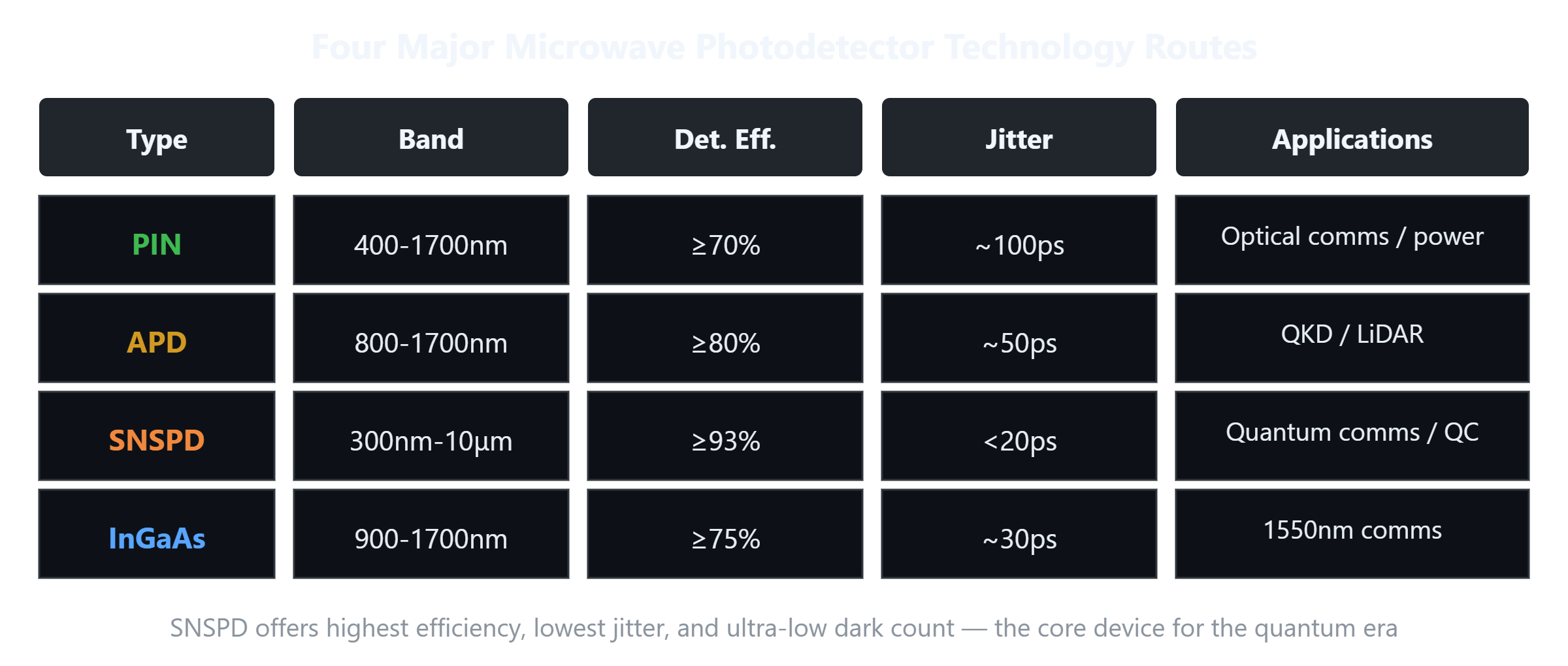
Figure 1: Comparison of four major microwave photodetector technology routes
II. Microwave Photodetectors: From Basic Types to Performance Boundaries
2.1 Four Mainstream Detector Technology Routes
Currently, commercial and cutting‑edge microwave photodetectors mainly include PIN photodiodes, APD avalanche detectors, SNSPD superconducting nanowire detectors, and InGaAs detectors. PINs are known for their simple structure and low cost; APDs provide internal gain to improve sensitivity and time resolution; InGaAs detectors are optimized for the 1550nm communication band; and SNSPDs, with near‑perfect efficiency and picosecond timing resolution, are the core devices in quantum communication and quantum computing experiments.
2.2 Physical Limits of Detectors: Quantum Noise and Dark Count
At the single‑photon detection level, the core bottlenecks are two physical limits: the quantum fluctuations of photons themselves, and dark count — spurious electrical signals generated spontaneously without photon arrival. SNSPDs overcome these limits due to their superconducting mechanism: the nanowire has zero resistance in the superconducting state, and a single photon can cause a local temperature rise above the critical point, producing a measurable resistance change without avalanche gain, achieving both ultra‑low dark count and ultra‑low timing jitter.

Figure 2: SNSPD superconducting nanowire single‑photon detector principle
III. The Quantum Communication Era: SNSPD Leads the Photodetection Revolution
3.1 Shanghai Institute of Microsystem: From 404 km to 100‑Mb QKD
The SNSPD team at the Shanghai Institute of Microsystem and Information Technology (SIMIT), Chinese Academy of Sciences, is one of the most influential research groups in the global quantum communication detector field. In 2016, their high‑performance SNSPD was used in a 404‑km fiber QKD experiment, setting a world record for secure transmission distance. In 2023, Pan Jianwei and Xu Feihu's group at USTC, in collaboration with You Lixing's team at SIMIT, published a result in Nature Photonics achieving 100‑Mb‑rate real‑time QKD using an 8‑pixel SNSPD, reaching 115.8 Mbps over 10 km of standard fiber.
3.2 2025 Breakthrough: 5 GHz Photon‑Number‑Resolving Detector
In early 2025, Li Hao and You Lixing's team at SIMIT developed a sandwich‑structured SNSPD with multi‑wire parallel operation, achieving a maximum count rate of 5 GHz and photon‑number resolution up to 61, enabling simultaneous detection of up to 61 photons.
3.3 2026 Progress: Multi‑photon Spatial Coincidence Detection
In early 2026, the same team published in Nature Photonics a novel superconducting nanowire combinatorial delay logic method that resolves all 152 possible single‑ and two‑photon events in a 16‑channel structure, providing a powerful tool for complex quantum entanglement networks.
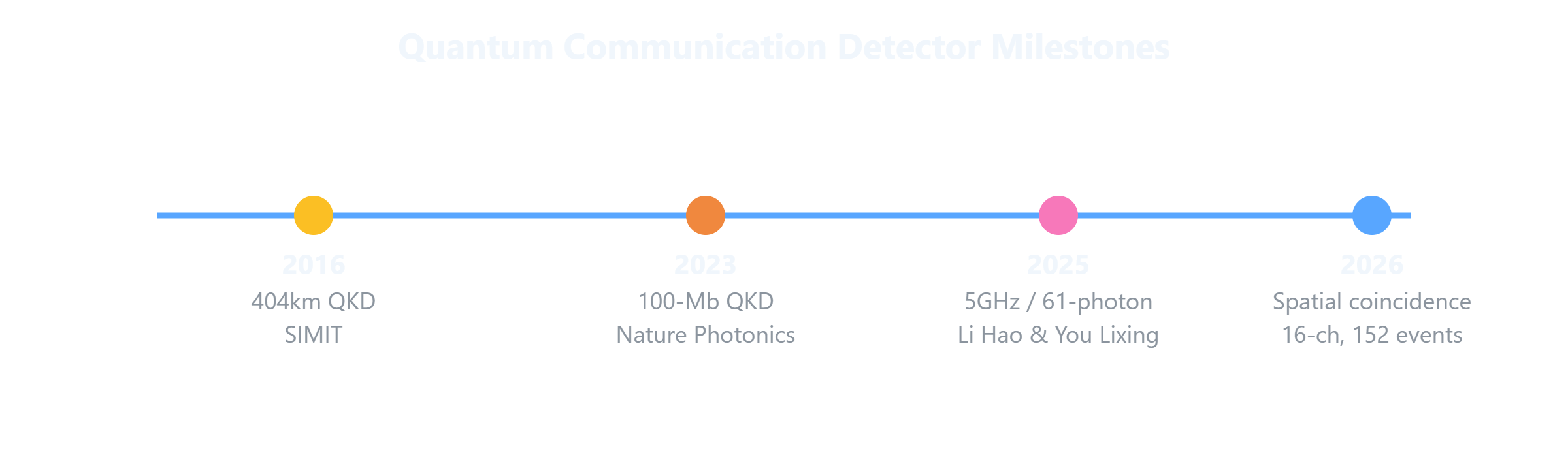
Figure 3: Quantum communication detector development milestones
3.4 University of Bristol: 9 GHz Squeezed‑Light Detector
In 2026, the QET Labs at the University of Bristol, in collaboration with Université Côte d'Azur, developed a heterogeneously integrated silicon‑photonic and silicon‑microelectronic chip for squeezed‑light detection, achieving a 9 GHz clock rate for ultra‑fast quantum optical measurements, providing key support for optical quantum computing and ultra‑low‑light communications.
IV. "Jiuzhang‑3": The Detector Engine for Optical Quantum Computing
Between 2025 and 2026, Pan Jianwei and Lu Chaoyang's team at USTC built the 255‑photon optical quantum computer "Jiuzhang‑3", again setting world records. They designed a spatial‑temporal demultiplexing photon detection method and constructed high‑fidelity quasi‑photon‑number‑resolving detectors meeting the triple demands of high efficiency, high timing resolution, and photon‑number resolution. SIMIT's multi‑pixel SNSPDs and 16‑channel spatial coincidence detection technologies perfectly fit the requirements for arrayed, parallel, and low‑cross‑talk detectors in optical quantum computing.
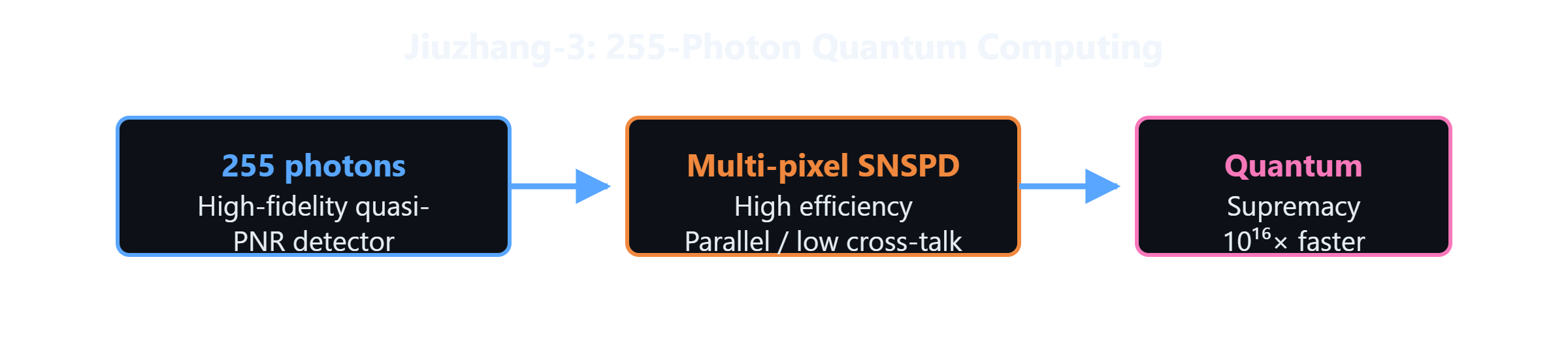
Figure 4: Jiuzhang‑3 optical quantum computing and detectors
V. Microwave Photonic Radar: An Emerging Force in Optical Sensing
5.1 From Electronic Radar to Photonic Radar
Traditional electronic radar faces "electronic bottlenecks" in generating and processing large‑bandwidth microwave signals. Microwave photonic radar uses photons as information carriers, leveraging optoelectronic technology to generate and process broadband microwave signals, effectively overcoming those bottlenecks. In 2017, the Institute of Electronics, CAS, successfully developed China's first microwave photonic radar prototype, capable of fast imaging, high resolution, and clear target identification.
5.2 NUAA: Twin Awards for Airborne Microwave Photonics
In 2025, the Microwave Photonics Lab at Nanjing University of Aeronautics and Astronautics (NUAA), led by Prof. Pan Shilong, achieved two major breakthroughs: (1) "Airborne Microwave Photonic Parallel Processing Technology" won the first prize in the special field of technological invention; (2) "Frequency Response Measurement Technology for High‑Speed Optical Communication Devices" won the first prize of the Ministry of Education's Scientific Research Outstanding Achievement Award (Engineering Technology). The lab also achieved sub‑picosecond absolute delay measurement in atmospheric optical RF links.
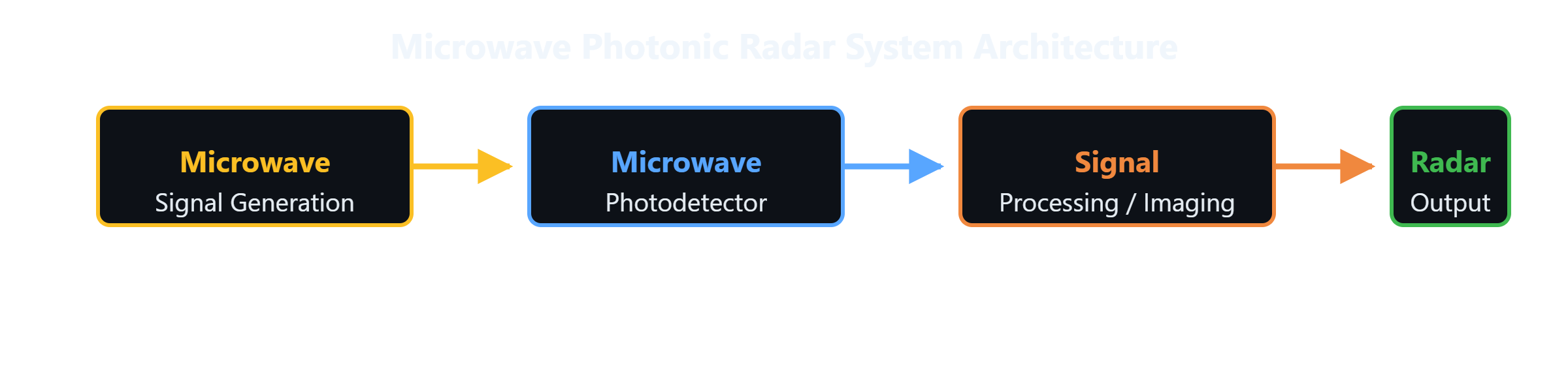
Figure 5: Microwave photonic radar system architecture
5.3 Integrated Microwave Photonic Chip: The Path to Miniaturization
The ultimate evolution of microwave photonics is integration. NUAA's lab and Nanjing University teams have verified silicon‑photonics or silicon‑nitride platforms for RF signal generation, filtering, and down‑conversion, gradually moving toward airborne and space‑borne applications.
VI. Commercial Microwave Photodetector Product Portfolio
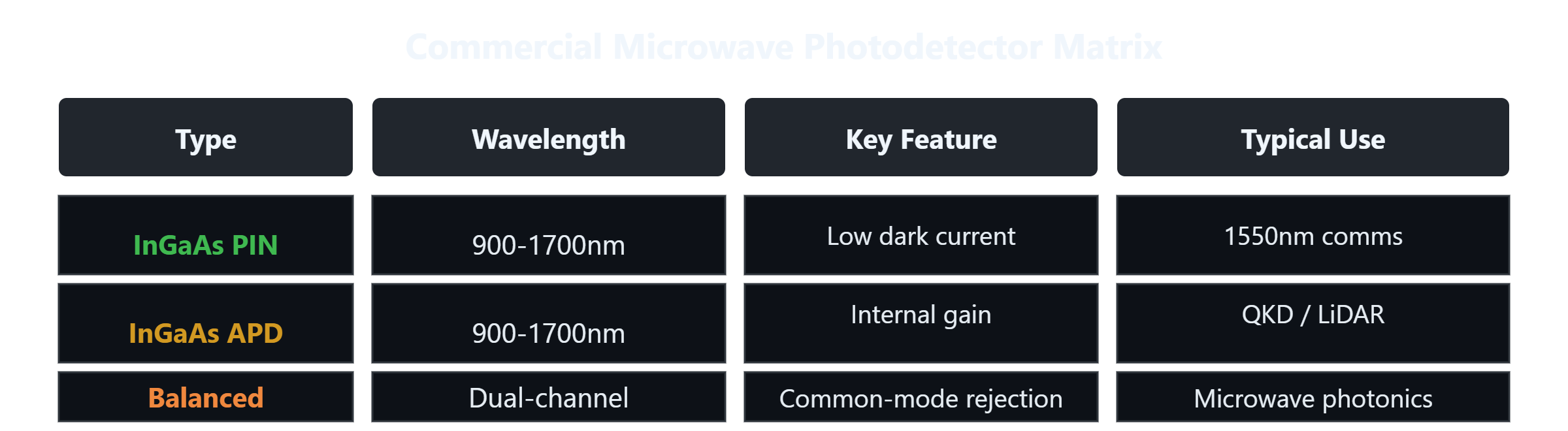
Figure 6: Commercial microwave photodetector product matrix
VII. Summary and Outlook: From Point Detection to Networked Quantum Sensing
Microwave photodetectors are at a confluence of explosive demand growth and rapid performance leaps. In quantum communications, SNSPD‑based superconducting detectors have achieved a capability leap from "detecting single photons" to "photon‑number resolution and complete spatial coincidence analysis," directly supporting breakthroughs such as 100‑Mb QKD, quantum computing, and long‑distance QKD.
In optical sensing, microwave photonic radar is moving from lab to airborne and space‑borne platforms; integrated microwave photonic chips make it possible to integrate the entire detection‑processing‑feedback chain on a single chip. This trend, combined with the large‑scale networking needs of quantum communications, drives detectors from single‑point devices toward networked, multi‑pixel, and intelligent solutions.
Looking forward, the technological evolution of microwave photodetectors will follow three main axes: (1) localization of SNSPD and further miniaturization of cryogenic systems; (2) scaling of multi‑pixel SNSPD arrays from today's few pixels to hundreds or thousands of pixels; and (3) deep integration with photonic integration platforms such as silicon photonics and thin‑film lithium niobate, achieving monolithic integration of detectors with modulators and lasers to build complete quantum optoelectronic integrated systems.